James Harrison
Interactive photographer portfolio concept
Problem Definition
James Harrison is a photographer whose work is defined by experimentation — moody lighting, unconventional compositions, and a cinematic quality that doesn’t fit neatly into any template. When he tried building a portfolio using standard website builders, every option forced his images into rigid grids and carousels designed for text-first content. The photography, which should be the hero, felt like an afterthought stuffed into pre-made boxes. Worse, the generic animations were sluggish, the load times were slow, and the browsing experience did nothing to evoke the emotional response his images deserve. He needed a portfolio that felt as artistic and dynamic as the photography itself — something that would immerse visitors rather than just present a gallery of thumbnails.
Engineered Solution
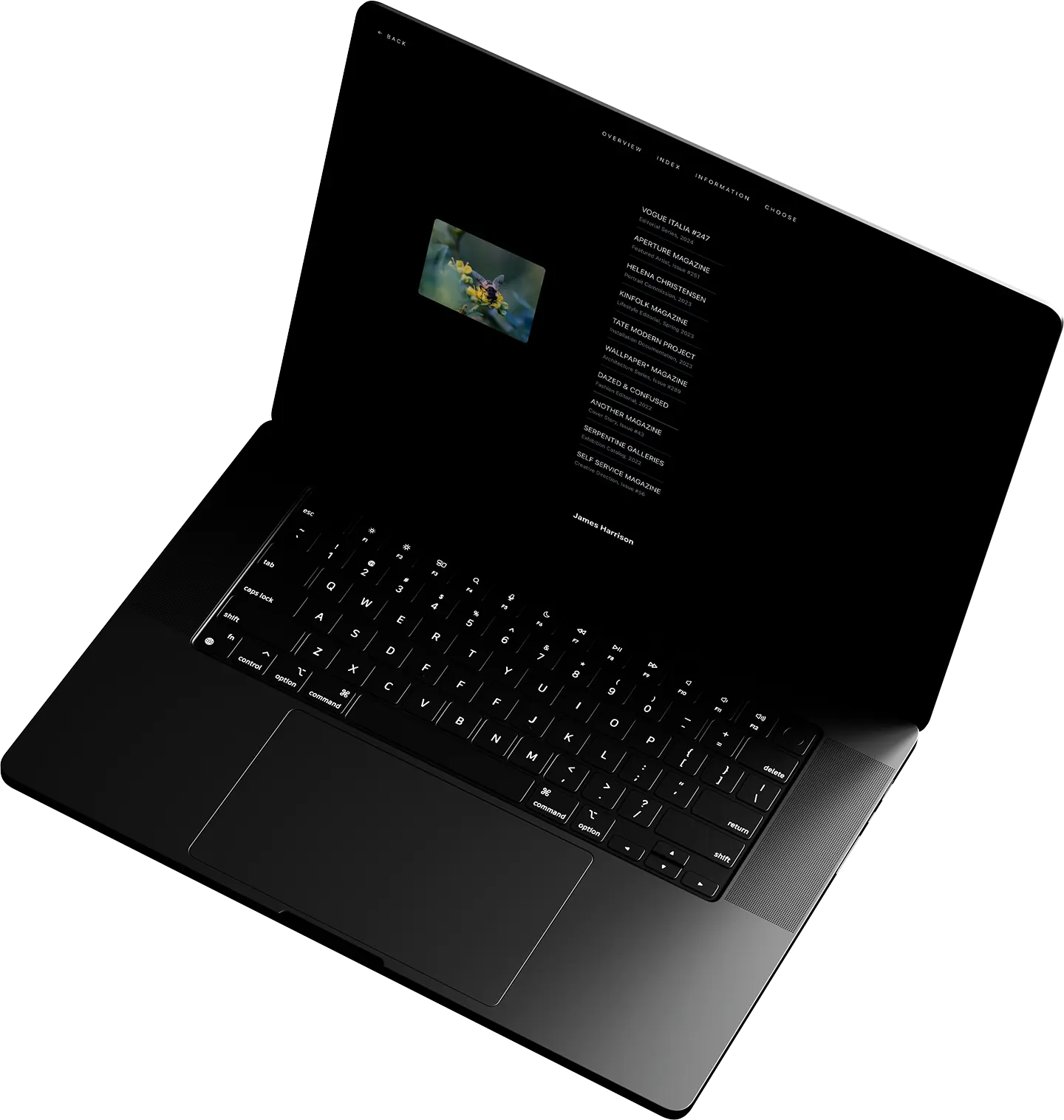
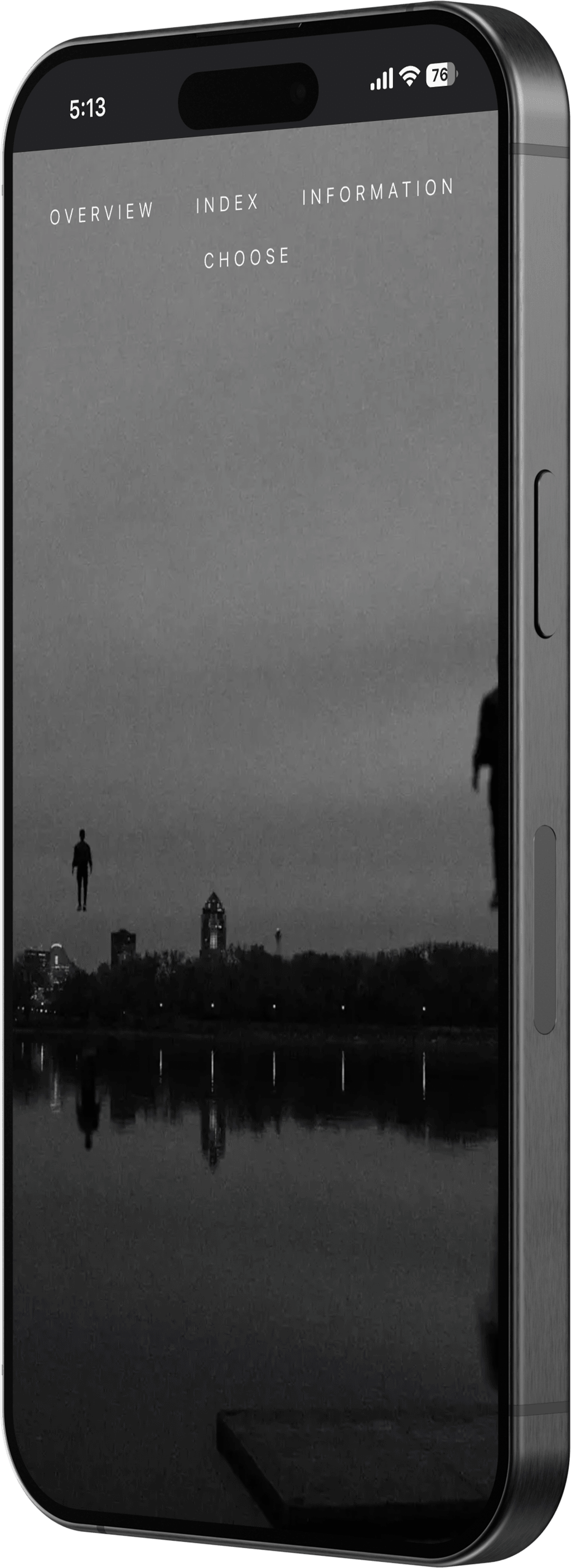
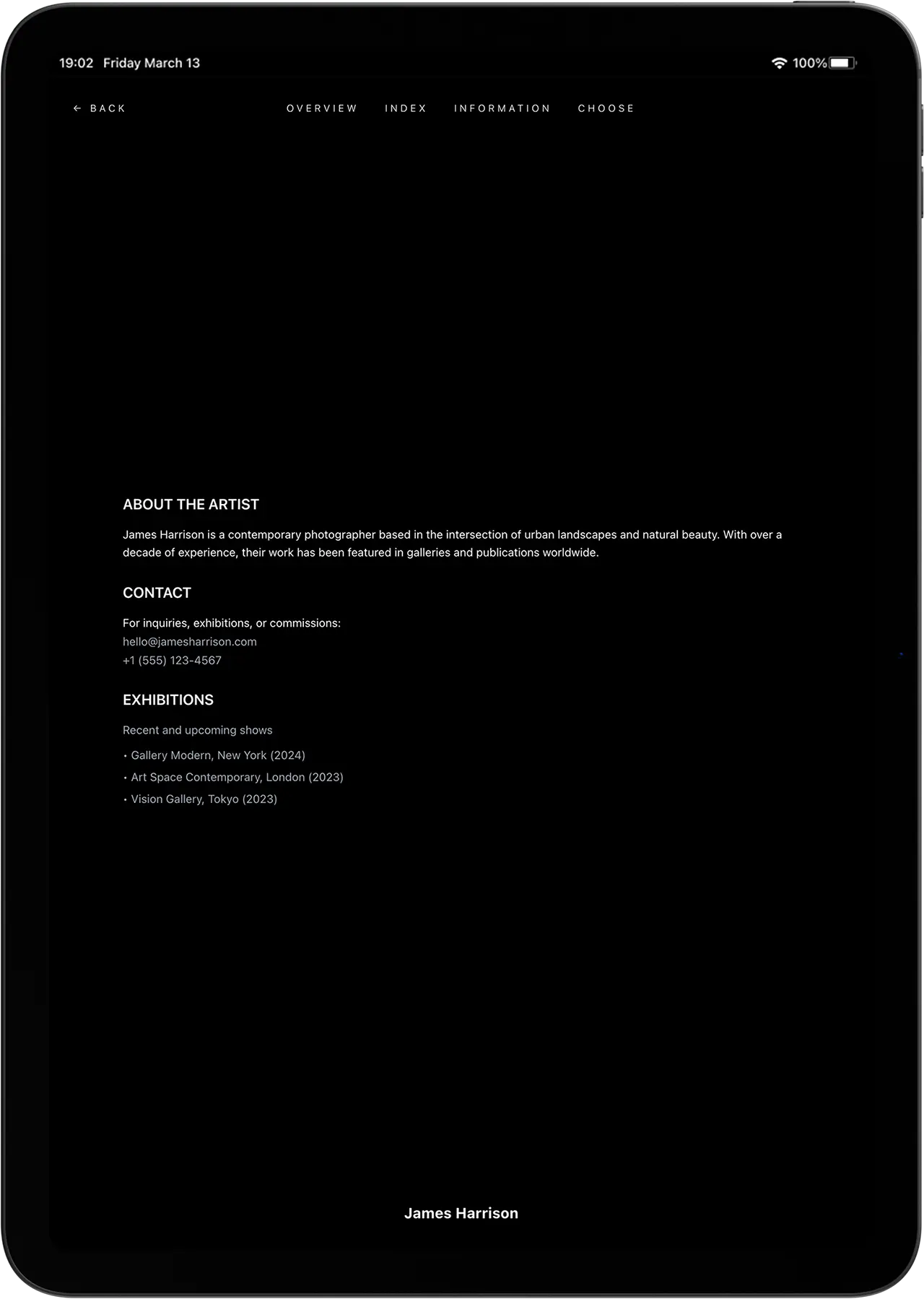
Rather than adapting a template, I designed a fully custom interactive gallery concept from scratch. The core idea was simple: remove everything that doesn’t serve the photography. The interface is deliberately minimal — no intrusive navigation, no cluttered layouts, no text competing for attention. Instead, fluid transitions and subtle motion guide visitors between images, creating a seamless browsing rhythm that mirrors the experience of flipping through a print portfolio. Each photograph is given space to breathe with full-bleed presentation that adapts responsively to any screen size. The animations are purposeful — they enhance the narrative flow between images rather than decorate for decoration’s sake. Every design decision was made with a single question in mind: does this serve the photograph?
Final Outcome
A high-impact portfolio concept that transforms how James’s photography is experienced online. The immersive layout ensures visitors engage with the work rather than the interface, letting the images speak for themselves. While this project exists as a concept, it demonstrates what’s possible when you prioritise the creative work over template constraints — a principle that applies to any portfolio, whether for photography, design, or art. The same approach could be adapted for a live launch, with additional features like client galleries, print store integration, or behind-the-scenes content added on top of the same foundation.
Love what you see?
I can help you build something similar. Whether you need a high-performance portfolio, a custom web app, or complex automations, let's talk about your next project.
Book a Call